
How Environmental Science Brings Different Fields Together
Environmental science combines biology, chemistry, geology and social science to explain complex problems and help communities make informed decisions.

Environmental science is multidisciplinary because environmental problems rarely have a single cause or consequence. It brings biology, chemistry and geology together with social sciences to examine how natural systems work, how people affect them and who experiences the results. Researchers combine field observations, laboratory tests, maps and community evidence to build explanations that can guide practical decisions.
A river pollution investigation, for example, may trace contaminants to their source, measure effects on aquatic life and assess how nearby communities use the water. No single discipline can answer all those questions, so specialists share evidence and compare methods.
Understanding how those contributions fit together helps readers assess environmental claims and the choices that follow. It also explains why sound findings depend not just on scientific measurements, but on clear communication and attention to the people affected.
- Environmental science connects natural systems with human activity and its effects.
- Biology, chemistry, geology and social sciences answer different parts of shared questions.
- Researchers combine fieldwork, testing, mapping and community evidence, while checking each method's limits.
- Clear communication helps the public and decision-makers understand findings, uncertainty and relevance.
What environmental science studies
Connected natural systems
Environmental science studies the relationships among living things, physical surroundings and human activity. A forest, for instance, includes trees and wildlife, but also soil, water, weather and the people who use or manage the land. Researchers examine how changes in one part can affect the rest, rather than treating each element as isolated.
- ☐ Identify the environmental system and the area being studied.
- ☐ Name the living and nonliving components involved.
- ☐ Separate observed changes from possible causes.
- ☐ Consider who or what may be affected.
The field covers problems such as habitat loss, contaminated water, changing climate and declining soil quality. These issues may develop over different timescales, from a sudden chemical spill to gradual shifts in rainfall. Scientists look for causes, consequences and connections that help explain what is changing and where further evidence is needed.
The scope can be local or global. A study might measure pollutants in one stream, compare conditions across a watershed or investigate how emissions affect the atmosphere. Scale matters because a result from one site may not represent a wider region, while broad patterns can conceal important differences between communities or ecosystems.
People within the environment
People are part of environmental systems, not merely observers of them. Farming, transport, energy production and urban growth change land, water and air; in turn, environmental conditions shape health, livelihoods and access to resources. Including human activity makes it possible to examine both the pressures people create and the consequences they face.
Social sciences help explain why environmental pressures vary between places. Researchers may study how laws, markets, infrastructure and cultural practices influence resource use or exposure to pollution. For example, two neighborhoods near the same industrial area can experience different risks if housing, transport routes or access to clean water differ.
This perspective also clarifies why evidence alone does not settle every public decision. Communities may weigh employment, health, cultural ties and ecological protection differently. Environmental science can describe likely effects and uncertainties, while public institutions and residents decide how to balance competing needs and distribute responsibilities.
Why environmental questions cross disciplines
Causes and consequences connect
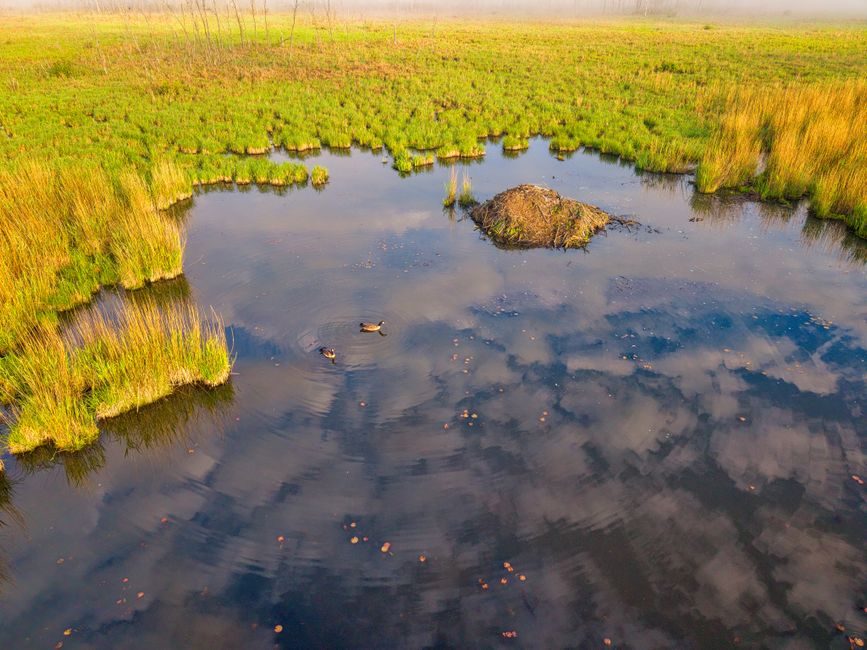
Environmental questions cross disciplines because causes and effects often belong to different parts of a system. Fertilizer washed from fields can alter water chemistry, encourage excessive algae growth and reduce oxygen available to fish. Explaining that chain requires knowledge of land use, chemical processes and aquatic biology, not just one measurement.
The same event can create several kinds of evidence. After a flood, geologists can study sediment movement, ecologists can assess damaged habitats, and public health researchers can examine contaminated supplies. Combining these findings helps distinguish immediate damage from longer-term effects and shows where response efforts may prevent additional harm.
Connections can also run in both directions. Removing vegetation may increase erosion, while sediment can cloud water and affect plants growing downstream. Understanding feedbacks like these helps researchers avoid simple explanations and identify interventions that address underlying causes rather than only treating visible symptoms.
Different questions need different expertise
A research question determines which disciplines are needed. To assess a proposed mine, investigators might ask how excavation could affect groundwater, nearby species and local employment. Geology, hydrology, ecology and social research each address part of that picture, while the shared question gives their work a common purpose.
Disciplines also differ in what they can establish. A laboratory analysis can identify substances in a sample, but it cannot by itself show how exposure affects a population. Field ecology can document changes in species, while interviews or policy analysis may reveal how people encounter a hazard and what decisions shape that exposure.
Bringing experts together does not mean every project needs every field. Researchers select methods that match the question, available evidence and decisions at stake. A focused study of soil contamination may need chemistry and geology first, then public health expertise if the findings indicate possible human exposure.
How scientists combine evidence from different fields
Match methods to questions
Scientists choose methods by asking what evidence would answer the question most directly. Field surveys can record species or visible damage, laboratory tests can identify contaminants, and maps can show where changes occur. Each method has limits, so researchers often use several approaches to check whether the findings support the same explanation.
- Relying on one sample; compare sites or repeat observations where appropriate.
- Treating a correlation as a cause; test alternative explanations.
- Ignoring method limits; state what the evidence cannot establish.
For a suspected pollution source, investigators might sample water upstream and downstream, test the samples in a lab and compare results with records of land use. The location comparison helps identify where conditions change; chemical analysis can show what substances are present. Together, these methods provide stronger evidence than either could alone.
Interviews and public records can add context to measurements. Residents may describe when a smell or discoloration appeared, while permits and site histories can point investigators toward possible sources. Such information guides follow-up work, but scientists still need independent observations and tests before treating a reported cause as established.
- Use surveys to record conditions in the field.
- Use laboratory tests to identify substances or properties.
- Use maps to compare locations and patterns.
- Use interviews and records to provide context.
| Method | Useful evidence | Main limitation |
|---|---|---|
| Field survey | Species or site conditions | May cover limited places or times |
| Laboratory test | Substances in a sample | Does not establish the source alone |
| Mapping | Spatial patterns and locations | Depends on accurate underlying data |
| Interviews and records | Local context and history | Do not replace direct measurement |
Check findings across evidence
Combining evidence means checking whether independent methods point toward a consistent account. If field observations show declining fish, water tests identify low oxygen and habitat surveys find excess algae, the results may fit a connected explanation. Researchers still examine other causes, because agreement does not automatically prove which factor came first.
Data from different disciplines may not line up neatly. One study can measure conditions at a single site, while another uses regional averages or a different time period. Researchers must check units, locations, sampling methods and dates before making comparisons, or apparent differences may reflect the way evidence was collected.
Uncertainty should remain visible when findings are shared. Scientists can distinguish direct observations from interpretations, explain gaps in sampling and note competing explanations. This makes a conclusion more useful: decision-makers can see what is well supported, what remains uncertain and what additional evidence could change the assessment.
Clear communication explains what researchers measured, what they found and what the evidence cannot yet tell us.
How environmental findings reach the public
Translate evidence clearly
Clear communication explains what researchers measured, what they found and what the evidence cannot yet tell us. A report on drinking water, for example, should identify the locations tested, the substances detected and whether results differ across sites. This lets readers distinguish measured conditions from broader claims about risk.
Organizations presenting research findings to wider audiences may use Local Seo Services to help people find reliable environmental information online. A clear public page should identify the study area, name its sources and link claims to supporting evidence. Those details help readers assess whether information applies to their community or describes a different place.
Visuals can make complex findings easier to compare, but they need context. A map should label its area and explain what its colors represent; a chart should name the measurement and time period. Without those details, readers may mistake a local pattern for a universal one or confuse relative change with actual conditions.
Connect findings to decisions
Environmental findings inform decisions when they answer practical questions in a form that decision-makers can use. A local water assessment might identify affected sites, possible sources and needed follow-up tests. Officials can then compare response options, while residents can see why monitoring or temporary precautions are being considered.
Different audiences need different levels of detail, but the underlying evidence should stay consistent. A technical report can document sampling and analysis, while a public summary explains the main result in plain language. Both should identify uncertainty, explain the study's boundaries and avoid implying that a preliminary result settles a policy choice.
Public input can improve the questions researchers ask and reveal conditions that measurements miss. Residents may point out seasonal water use, informal access routes or changes that occur outside scheduled surveys. Researchers can use those observations to refine fieldwork, then report how the evidence shaped conclusions without treating any single account as a substitute for systematic study.
Ways organizations share local environmental information
Make Local Evidence Usable
Organizations can make environmental findings useful by connecting measurements to places and decisions residents recognize. A river report, for example, should identify the sampled reach, explain what was tested, and say whether the result affects swimming, drinking water, or habitat. Clear maps and plain-language summaries help readers understand the finding without replacing the underlying data.
Good public information explains how evidence was collected, not just what it appears to show. A monitoring page can name the sampling dates, describe the method, and distinguish a single reading from a longer pattern. Environmental groups that publish educational material can use Seo Services to make useful research easier for readers to discover.
Organizations should also state what remains unknown and where people can ask questions. A result may apply only to one stream, season, or type of pollutant, so a map boundary or methods note can prevent overgeneralization. When a finding prompts action, explain who is responsible and what further testing or review is planned.
- Map the sampling location and coverage.
- Explain methods in everyday language.
- Separate measured results from interpretation.
- Name the next step and responsible organization.
Reach People Through Trusted Channels
The right channel depends on who needs the information and what they must do with it. Residents may need a concise alert through a local noticeboard or public meeting, while planners may need a detailed dataset and technical report. Using more than one channel can broaden access, provided the central facts remain consistent.
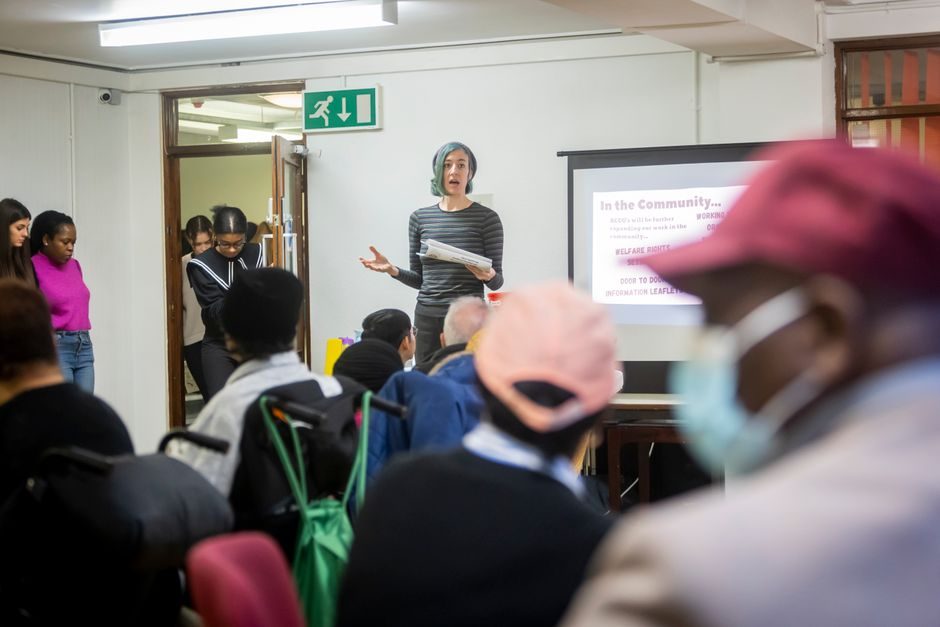
Public meetings work best when organizers show maps and explain uncertainty before inviting questions. A short briefing should identify the issue, the evidence behind it, and any proposed response; attendees can then challenge assumptions or point out local conditions. Providing materials afterward gives people time to check details and share accurate information.
Accessibility is part of reliable communication, not an afterthought. Translate key messages when a community uses multiple languages, offer text alternatives to maps, and avoid relying only on online documents. Environmental organizations serving Leicester and Leicestershire may find that Leicester Seo Services helps local audiences find their resources and activities.
Common limits and pitfalls in interpreting evidence

Read Samples in Context
A measurement is only as representative as the place, time, and method used to collect it. One water sample can reveal a condition at a particular point, but it cannot automatically describe an entire watershed or a different season. For environmental decisions, check the sampling design before treating a result as a broad picture.
Environmental conditions can change quickly, which makes timing important. Rain may carry pollutants into a stream, while dry weather can concentrate some substances; a sample taken before or after those conditions may tell a different story. Look for repeated measurements and notes about weather, location, and collection procedures before comparing results.
Measurement limits also matter: instruments have detection ranges, and laboratories may report uncertainty or results below a threshold. A value below the detection limit does not prove that a substance is entirely absent. Reports should explain what the method can detect and how uncertainty affects the conclusion, especially when comparing small differences.
- Check where and when samples were collected.
- Look for repeat measurements.
- Read method and detection-limit notes.
- Avoid treating one location as a whole region.
Separate Correlation From Cause
Two environmental changes occurring together do not establish that one caused the other. If a fish population falls while water temperature rises, other influences—such as habitat change, disease, or fishing pressure—may also contribute. Researchers test competing explanations by comparing locations, examining timelines, and using evidence that can distinguish among causes.
Models can clarify possible outcomes, but their projections depend on assumptions and input data. A model of flood risk, for instance, may change when land use, rainfall patterns, or drainage conditions are represented differently. Read the stated assumptions and range of scenarios rather than treating one output as a certain forecast.
Evidence can also be uneven across communities and ecosystems. Remote locations may have fewer monitoring stations, while short projects may miss seasonal changes or long-term effects. A responsible interpretation identifies these gaps and avoids implying that an unmeasured area has the same conditions as a monitored one.
Tips for evaluating environmental claims
Trace Claims to Their Evidence
Start by asking what was measured and whether the evidence supports the exact claim being made. A statement about one chemical at one monitoring site cannot by itself establish the safety of every nearby water source. Check the original report, identify its geographic and time limits, and compare its wording with the summary you encountered.
- Match each claim to evidence covering the same place and period.
- Check methods and uncertainty before accepting a strong conclusion.
- Compare independent sources when accounts conflict.
Look for the method, sample coverage, and funding or institutional context, while remembering that an organization’s identity alone does not prove a claim true or false. A useful report makes its methods and limitations available for scrutiny. If those details are missing, treat the claim as unverified rather than filling the gaps with assumptions.
For an environmental organization serving Leicester and Leicestershire, Leicester Seo Services may help local audiences find its resources and activities; that discoverability does not replace checking the evidence. When comparing accounts, seek independent sources that rely on different data or methods. Agreement across credible evidence can strengthen a conclusion, while disagreements may reveal genuine uncertainty.
- Find the underlying report or dataset.
- Check the place, period, and population covered.
- Compare the claim with the stated findings.
- Look for disclosed methods and limitations.
Notice Framing and Uncertainty
Headlines often compress complex findings into a few words, so read beyond the headline before drawing a conclusion. Words such as “linked,” “associated,” and “caused” describe different levels of evidence. Check whether the article preserves those distinctions and whether its examples represent a measured result or a possible explanation.
A credible scientific account can be clear about uncertainty without making the evidence useless. Researchers may agree that a pollutant is present while still studying its source, exposure pathways, or effects under particular conditions. Separate what is established from what remains under investigation, and note whether new measurements could change the assessment.
Watch for selective comparisons, such as comparing different seasons or locations as though conditions were identical. Ask whether the same measurement method was used and whether relevant factors were considered. When a claim presents a single number without its unit, baseline, or context, seek those details before deciding whether the change is meaningful.
How to explore environmental science further
Follow a Question Across Fields
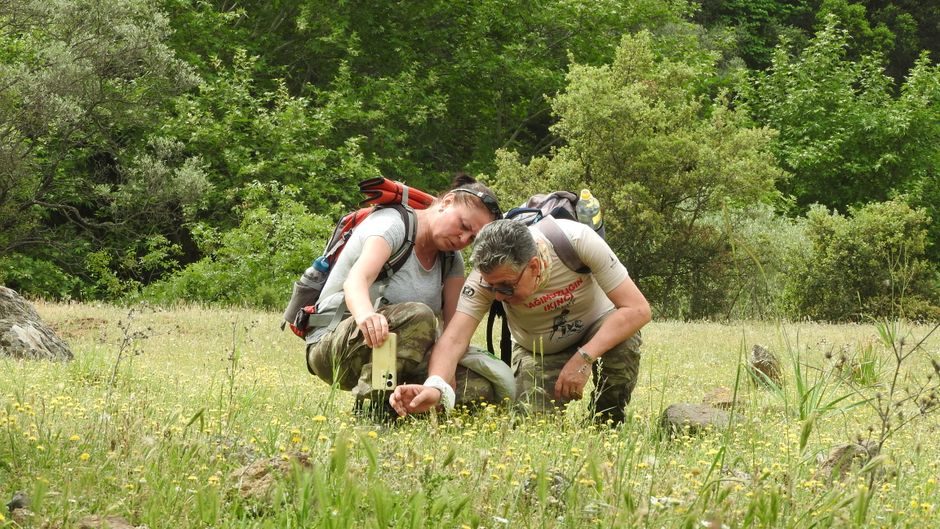
Choose a local question and trace how different disciplines help answer it. For example, investigating declining wetland plants might involve biologists identifying species, chemists testing water, geologists studying sediment, and social scientists examining land use and community needs. Each field contributes evidence, but the shared question determines how those findings fit together.
Start with an accessible overview from a university, public agency, or established scientific organization, then follow its references to methods and data. A glossary can clarify terms, while a map or dataset can show where observations were made. Keeping a note of each source’s subject and limitations makes it easier to compare evidence without confusing unlike measures.
Local public records and open monitoring data can make an abstract issue concrete. Look for watershed plans, air-quality summaries, habitat assessments, or environmental review documents relevant to your area. Read the methods alongside the results, and note who collected the information, what time period it covers, and which questions it cannot answer.
- Choose one local environmental question.
- Identify the disciplines contributing evidence.
- Read methods as well as summaries.
- Record each source’s limits.
Connect Science With Decisions
Environmental science becomes easier to understand when you follow evidence into a real decision. A city considering wetland protection may weigh species surveys, flood models, soil conditions, land ownership, and residents’ priorities. Reviewing the decision record shows how scientific findings inform choices alongside legal duties, costs, and public values.
Public consultations and environmental assessments offer practical ways to see disagreements and trade-offs clearly. Read what alternatives were considered, which impacts were predicted, and how comments from affected communities were addressed. A decision may not follow one scientific recommendation exactly, because authorities also consider feasibility and competing needs; the record should explain that reasoning.
Learning can continue through field walks, public talks, and community monitoring projects that explain their protocols. Before taking part, check how observations will be recorded, who will review them, and whether the activity is designed for education or formal research. These distinctions help participants understand what their observations can contribute and avoid overstating their scientific reach.
Frequently asked questions
What makes environmental science different from ecology?Ecology studies relationships among organisms and their environments, while environmental science draws on ecology alongside chemistry, geology, physics, and social sciences. Its scope often includes how human activity changes natural systems and how evidence can inform responses. The fields overlap substantially, but environmental science is especially focused on combining methods to understand environmental problems and their practical consequences.
How do social sciences contribute to environmental research?Social sciences help explain how people use resources, experience environmental change, and respond to policies. Interviews, surveys, economic analysis, and historical research can reveal why a conservation measure succeeds in one community but faces barriers in another. This evidence complements ecological or chemical measurements; it does not replace them, because each method answers different parts of the environmental question.
Can environmental science prove exactly what caused a change?Sometimes researchers can identify a cause with strong evidence, but many environmental changes have several interacting influences. Scientists compare timelines, locations, mechanisms, and alternative explanations to determine which causes are plausible. The strength of a conclusion depends on the quality and coverage of the evidence, so reports may distinguish a likely cause from one that is firmly established.
Why do reports about the same environmental issue disagree?Reports may use different sampling locations, time periods, methods, or definitions, so they may not be measuring the same thing. They can also emphasize different questions, such as immediate exposure versus long-term ecosystem effects. Compare the underlying methods and scope before deciding that one account contradicts another; sometimes the apparent disagreement reflects distinct evidence rather than incompatible findings.
Putting Environmental Evidence Together
Environmental science brings biological, chemical, geological, and social evidence to bear on questions that no single discipline can fully answer. Its strength comes from making those contributions comparable while keeping their limits visible. When reading a finding, focus on what was measured, where and when the evidence was collected, and how researchers connect observations to explanations or decisions.
A practical next step is to choose one environmental issue near you and locate a public report or dataset about it. Read the methods and limitations alongside the summary, then note which disciplines contributed and what remains uncertain. That simple habit helps distinguish measured evidence from interpretation and shows how scientific understanding can inform, but not automatically settle, public decisions.
Add GLOBAL NEWS as a preferred source on Google


